Buy lumotransport.eu ?
We are moving the project
lumotransport.eu .
Are you interested in purchasing the domain
lumotransport.eu ?
domain@kv-gmbh.de · 0541-91531010
Buy lumotransport.eu ?
Does radiology require training assistance?
Yes, radiology does require training assistance. Radiology is a complex field that involves the use of advanced imaging technology to diagnose and treat medical conditions. Radiologists need to undergo extensive training to understand the various imaging techniques, interpret the results accurately, and make informed decisions about patient care. Additionally, ongoing training and education are essential to keep up with the latest advancements in imaging technology and medical knowledge. Therefore, training assistance in the form of mentorship, residency programs, and continuing education opportunities is crucial for radiologists to develop and maintain their skills. **
How can one study radiology?
One can study radiology by completing a bachelor's degree in a related field such as biology, chemistry, or physics, followed by attending medical school to become a doctor. After completing medical school, one can pursue a residency program in radiology, which typically lasts for four years. During the residency, individuals receive hands-on training in various imaging techniques and interpretation of medical images. Additionally, obtaining board certification in radiology is often required to practice as a radiologist. **

Similar search terms for Radiology
Top-Angebote
Products related to Radiology:
-
Uplifted Finds High Volume Safety Breakaway Logistics Hub purpleOptimize your pet inventory management with the HighVolume Safety Hub, a professionalgrade identification system engineered with multiunit deployment logic. This highutility lot features 100 individual collar modules, each constructed with a...165,97 $*Shipping: 0,00 $Secure redirect to the provider
-
Uplifted Finds High Volume Safety Breakaway Logistics Hub multicolorOptimize your pet inventory management with the HighVolume Safety Hub, a professionalgrade identification system engineered with multiunit deployment logic. This highutility lot features 100 individual collar modules, each constructed with a...165,97 $*Shipping: 0,00 $Secure redirect to the provider
-
Uplifted Finds High Volume Safety Breakaway Logistics Hub coffeeOptimize your pet inventory management with the HighVolume Safety Hub, a professionalgrade identification system engineered with multiunit deployment logic. This highutility lot features 100 individual collar modules, each constructed with a...165,97 $*Shipping: 0,00 $Secure redirect to the provider
-
Uplifted Finds High Volume Safety Breakaway Logistics Hub orangeOptimize your pet inventory management with the HighVolume Safety Hub, a professionalgrade identification system engineered with multiunit deployment logic. This highutility lot features 100 individual collar modules, each constructed with a...165,97 $*Shipping: 0,00 $Secure redirect to the provider




-
Is the training to become a medical technical radiology assistant (MTRA) in radiology dangerous?
The training to become a medical technical radiology assistant (MTRA) in radiology is not inherently dangerous. However, like any medical profession, there are potential risks associated with working in a healthcare setting, such as exposure to radiation and infectious diseases. Proper training, adherence to safety protocols, and the use of protective equipment can help minimize these risks. Additionally, ongoing education and professional development are important for staying updated on best practices for ensuring safety in the workplace. **
-
What are the requirements for a radiology assistant?
To become a radiology assistant, one typically needs to have a bachelor's degree in radiologic technology or a related field. Additionally, many employers require certification as a radiologic technologist and several years of experience working in radiology. Some employers may also prefer candidates who have completed a radiology assistant program or have a master's degree in radiologic science. Strong communication and interpersonal skills are also important for this role, as radiology assistants often work closely with patients and other healthcare professionals. **
-
How do I find an internship in radiology?
To find an internship in radiology, you can start by reaching out to local hospitals, medical imaging centers, and radiology departments at healthcare facilities to inquire about internship opportunities. You can also check with your college or university's career services office, as they may have connections with healthcare organizations that offer radiology internships. Additionally, networking with radiology professionals and joining professional organizations in the field can help you learn about internship opportunities and make valuable connections. Finally, consider searching online job boards and internship databases for radiology internships in your area. **
-
What are the costs of a radiology practice?
The costs of a radiology practice can include equipment and technology expenses, such as MRI machines, CT scanners, and X-ray machines, which can be quite expensive to purchase and maintain. Additionally, there are costs associated with staffing, including salaries for radiologists, technicians, and administrative staff. Other costs may include facility expenses, such as rent, utilities, and maintenance, as well as the cost of supplies and materials needed for imaging procedures. Finally, there are also costs associated with compliance, such as maintaining accreditation and meeting regulatory requirements. **


What is the difference between training to become a medical technology radiology assistant and training to become a radiology technologist?
Training to become a medical technology radiology assistant typically involves a shorter program, usually a certificate or associate degree, focusing on assisting radiologic technologists with patient care, equipment operation, and image processing. On the other hand, training to become a radiology technologist involves a more in-depth program, usually a bachelor's degree, that includes coursework in anatomy, physiology, patient care, radiation physics, and imaging techniques. Radiology technologists are responsible for performing imaging procedures and ensuring high-quality diagnostic images are produced, while radiology assistants support technologists in various aspects of the imaging process. **
What is the difference between training to become a medical technology radiology assistant and training to become a radiology technician?
Training to become a medical technology radiology assistant typically involves a shorter program, usually a certificate or associate degree, focusing on assisting radiologic technologists with patient care, positioning, and equipment operation. On the other hand, training to become a radiology technician involves a more comprehensive program, usually a bachelor's degree, that includes coursework in anatomy, physiology, patient care, radiation physics, and imaging techniques. Radiology technicians are trained to perform imaging procedures independently, while radiology assistants work under the supervision of radiologic technologists. **
Top-Angebote
Products related to Radiology:
-
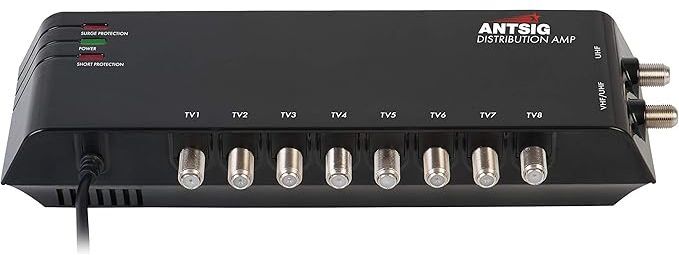
Antsig Distribution Amplifier 8 Way, NewEnsure crystal-clear signal strength across multiple devices with the Antsig Distribution Amplifier 8 Way — a reliable and high-performance solution for distributing digital TV, FM, or DAB signals to multiple TVs or tuners in your home or commercial setup. This amplifier is designed to boost signal strength and maintain picture and sound quality, especially in areas with weak reception. Whether you're connecting TVs in different rooms or setting up a home entertainment system, Antsig delivers superior signal stability and wide coverage, making it the perfect choice for seamless media enjoyment. 🔶 ( 8-Way Signal Distribution ) – Distributes amplified signal to up to 8 different TVs or devices without signal loss. 🔶 ( High Gain Amplification ) – Enhances weak signals, improving clarity and reception across all connected devices. 🔶 ( Digital TV, FM & DAB Compatible ) – Supports a wide range of signals for versatile use in your entertainment setup. 🔶 ( Easy Plug-and-Play Installation ) – Simple setup with no complex configuration needed; ready to go out of the box. 🔶 ( Low Noise Output ) – Delivers a clean, interference-free signal for superior audio and video performance. 🔶 ( Compact & Durable Design ) – Space-saving design fits easily into any setup and built with long-lasting components. 🔶 ( Ideal for Homes & Commercial Spaces ) – Perfect for large households, offices, apartments, and hotels. 🔶 ( Power Supply Included ) – Comes complete with its own power adapter for uninterrupted performance. 🔶 ( Stable Signal Across All Ports ) – Ensures consistent signal strength across all 8 outputs. 🔶 ( Wall-Mountable Option ) – Flexible installation with optional wall mounting for better space management. The Antsig Distribution Amplifier 8 Way is the ultimate solution for homes or businesses needing consistent, high-quality signal distribution across multiple screens. Say goodbye to signal dropouts and enjoy uninterrupted entertainment with strong, stable performance in every room. Ideal for digital TV installations, this amplifier ensures you get the best possible viewing and listening experience from all your connected devices.24,99 £*Shipping: 0,00 £Secure redirect to the provider
-
Radius Electrofusion Gas Distribution Valve 32mmDonkin MDPE (PE 80) electrofusion fittings, for use with MDPE (PE80) gas pipe, is manufactured to the requirements of B.G Transco Technical Standard PL2 - Part 4. Electrofusion fittings are supplied in individual sealed bags to avoid contamination of the joint surfaces prior to jointing.79,02 £*Shipping: 0,00 £Secure redirect to the provider
-
Uplifted Finds High Volume Safety Breakaway Logistics Hub purpleOptimize your pet inventory management with the HighVolume Safety Hub, a professionalgrade identification system engineered with multiunit deployment logic. This highutility lot features 100 individual collar modules, each constructed with a...165,97 $*Shipping: 0,00 $Secure redirect to the provider
-
Uplifted Finds High Volume Safety Breakaway Logistics Hub multicolorOptimize your pet inventory management with the HighVolume Safety Hub, a professionalgrade identification system engineered with multiunit deployment logic. This highutility lot features 100 individual collar modules, each constructed with a...165,97 $*Shipping: 0,00 $Secure redirect to the provider
-
Does radiology require training assistance?
Yes, radiology does require training assistance. Radiology is a complex field that involves the use of advanced imaging technology to diagnose and treat medical conditions. Radiologists need to undergo extensive training to understand the various imaging techniques, interpret the results accurately, and make informed decisions about patient care. Additionally, ongoing training and education are essential to keep up with the latest advancements in imaging technology and medical knowledge. Therefore, training assistance in the form of mentorship, residency programs, and continuing education opportunities is crucial for radiologists to develop and maintain their skills. **
-
How can one study radiology?
One can study radiology by completing a bachelor's degree in a related field such as biology, chemistry, or physics, followed by attending medical school to become a doctor. After completing medical school, one can pursue a residency program in radiology, which typically lasts for four years. During the residency, individuals receive hands-on training in various imaging techniques and interpretation of medical images. Additionally, obtaining board certification in radiology is often required to practice as a radiologist. **
-
Is the training to become a medical technical radiology assistant (MTRA) in radiology dangerous?
The training to become a medical technical radiology assistant (MTRA) in radiology is not inherently dangerous. However, like any medical profession, there are potential risks associated with working in a healthcare setting, such as exposure to radiation and infectious diseases. Proper training, adherence to safety protocols, and the use of protective equipment can help minimize these risks. Additionally, ongoing education and professional development are important for staying updated on best practices for ensuring safety in the workplace. **
-
What are the requirements for a radiology assistant?
To become a radiology assistant, one typically needs to have a bachelor's degree in radiologic technology or a related field. Additionally, many employers require certification as a radiologic technologist and several years of experience working in radiology. Some employers may also prefer candidates who have completed a radiology assistant program or have a master's degree in radiologic science. Strong communication and interpersonal skills are also important for this role, as radiology assistants often work closely with patients and other healthcare professionals. **
Similar search terms for Radiology
-
Uplifted Finds High Volume Safety Breakaway Logistics Hub coffeeOptimize your pet inventory management with the HighVolume Safety Hub, a professionalgrade identification system engineered with multiunit deployment logic. This highutility lot features 100 individual collar modules, each constructed with a...165,97 $*Shipping: 0,00 $Secure redirect to the provider
-
Uplifted Finds High Volume Safety Breakaway Logistics Hub orangeOptimize your pet inventory management with the HighVolume Safety Hub, a professionalgrade identification system engineered with multiunit deployment logic. This highutility lot features 100 individual collar modules, each constructed with a...165,97 $*Shipping: 0,00 $Secure redirect to the provider
-
Uplifted Finds High Volume Safety Breakaway Logistics Hub redOptimize your pet inventory management with the HighVolume Safety Hub, a professionalgrade identification system engineered with multiunit deployment logic. This highutility lot features 100 individual collar modules, each constructed with a...165,97 $*Shipping: 0,00 $Secure redirect to the provider
-
Uplifted Finds High Volume Safety Breakaway Logistics Hub greenOptimize your pet inventory management with the HighVolume Safety Hub, a professionalgrade identification system engineered with multiunit deployment logic. This highutility lot features 100 individual collar modules, each constructed with a...165,97 $*Shipping: 0,00 $Secure redirect to the provider
-
How do I find an internship in radiology?
To find an internship in radiology, you can start by reaching out to local hospitals, medical imaging centers, and radiology departments at healthcare facilities to inquire about internship opportunities. You can also check with your college or university's career services office, as they may have connections with healthcare organizations that offer radiology internships. Additionally, networking with radiology professionals and joining professional organizations in the field can help you learn about internship opportunities and make valuable connections. Finally, consider searching online job boards and internship databases for radiology internships in your area. **
-
What are the costs of a radiology practice?
The costs of a radiology practice can include equipment and technology expenses, such as MRI machines, CT scanners, and X-ray machines, which can be quite expensive to purchase and maintain. Additionally, there are costs associated with staffing, including salaries for radiologists, technicians, and administrative staff. Other costs may include facility expenses, such as rent, utilities, and maintenance, as well as the cost of supplies and materials needed for imaging procedures. Finally, there are also costs associated with compliance, such as maintaining accreditation and meeting regulatory requirements. **
-
What is the difference between training to become a medical technology radiology assistant and training to become a radiology technologist?
Training to become a medical technology radiology assistant typically involves a shorter program, usually a certificate or associate degree, focusing on assisting radiologic technologists with patient care, equipment operation, and image processing. On the other hand, training to become a radiology technologist involves a more in-depth program, usually a bachelor's degree, that includes coursework in anatomy, physiology, patient care, radiation physics, and imaging techniques. Radiology technologists are responsible for performing imaging procedures and ensuring high-quality diagnostic images are produced, while radiology assistants support technologists in various aspects of the imaging process. **
-
What is the difference between training to become a medical technology radiology assistant and training to become a radiology technician?
Training to become a medical technology radiology assistant typically involves a shorter program, usually a certificate or associate degree, focusing on assisting radiologic technologists with patient care, positioning, and equipment operation. On the other hand, training to become a radiology technician involves a more comprehensive program, usually a bachelor's degree, that includes coursework in anatomy, physiology, patient care, radiation physics, and imaging techniques. Radiology technicians are trained to perform imaging procedures independently, while radiology assistants work under the supervision of radiologic technologists. **
* All prices are inclusive of VAT and, if applicable, plus shipping costs. The offer information is based on the details provided by the respective shop and is updated through automated processes. Real-time updates do not occur, so deviations can occur in individual cases. ** Note: Parts of this content were created by AI.