Buy lumotransport.eu ?
We are moving the project
lumotransport.eu .
Are you interested in purchasing the domain
lumotransport.eu ?
domain@kv-gmbh.de · 0541-91531010
Buy lumotransport.eu ?
What is the difference between docker kill and docker stop?
The main difference between `docker kill` and `docker stop` is how they handle the termination of a container. When you use `docker stop`, it sends a SIGTERM signal to the container, allowing it to gracefully stop by executing any shutdown procedures. On the other hand, `docker kill` sends a SIGKILL signal to the container, forcing it to immediately stop without any cleanup. In summary, `docker stop` gives the container a chance to clean up and exit gracefully, while `docker kill` forcefully terminates the container. **
Is Docker Desktop secure?
Docker Desktop is generally considered to be secure, as it provides isolation between containers and the host system. However, like any software, there may be vulnerabilities that could potentially be exploited. It is important to keep Docker Desktop up to date with the latest security patches and follow best practices for securing containerized applications. Additionally, users should be cautious when downloading and running images from untrusted sources to minimize security risks. **
Similar search terms for Docker
Top-Angebote
Products related to Docker:
-
Radius Electrofusion Gas Distribution Valve 32mmDonkin MDPE (PE 80) electrofusion fittings, for use with MDPE (PE80) gas pipe, is manufactured to the requirements of B.G Transco Technical Standard PL2 - Part 4. Electrofusion fittings are supplied in individual sealed bags to avoid contamination of the joint surfaces prior to jointing.79,02 £*Shipping: 0,00 £Secure redirect to the provider
-
Uplifted Finds Mini Portable Folding Stove And High Fidelity Thermal Logistics Architecture Mini Portable Folding Stove And High Fidelity Thermal Logistics ArchitectureCommand ultimate environmental confidence with this Stainless Steel Mini Folding Stove, a thermal regulation solution specifically engineered to act as a comprehensive tool for elite organization and superior technical ergonomics. Built with a...177,97 $*Shipping: 0,00 $Secure redirect to the provider
-
Uplifted Finds High Volume Safety Breakaway Logistics Hub orangeOptimize your pet inventory management with the HighVolume Safety Hub, a professionalgrade identification system engineered with multiunit deployment logic. This highutility lot features 100 individual collar modules, each constructed with a...165,97 $*Shipping: 0,00 $Secure redirect to the provider
-
Uplifted Finds High Volume Safety Breakaway Logistics Hub blueOptimize your pet inventory management with the HighVolume Safety Hub, a professionalgrade identification system engineered with multiunit deployment logic. This highutility lot features 100 individual collar modules, each constructed with a...165,97 $*Shipping: 0,00 $Secure redirect to the provider




-
'Can't access Docker files?'
If you are unable to access Docker files, there could be a few potential reasons for this. First, ensure that you have the necessary permissions to access the files. If you are using Docker in a virtual environment, make sure that the virtual environment is properly set up and running. Additionally, check that the file paths and names are correct and that the Docker containers are running as expected. If you are still unable to access the files, it may be helpful to consult Docker documentation or seek assistance from the Docker community for troubleshooting. **
-
What are the Docker ports?
Docker ports are used to expose services running inside a Docker container to the outside world. Ports are essential for allowing communication between the container and the host machine or other containers. By mapping ports from the container to the host machine, external services can interact with the services running inside the container. Docker ports are specified in the Dockerfile or when running a container using the `-p` flag followed by the port numbers. **
-
How do Docker containers communicate?
Docker containers communicate with each other through networking. Each container can be assigned a unique IP address and port number, allowing them to send and receive data over the network. Docker provides different networking options such as bridge, overlay, and host networking to facilitate communication between containers. Additionally, containers can also communicate with each other using environment variables, shared volumes, or by exposing and consuming ports. **
-
How can I combine Docker?
You can combine Docker with other technologies and tools to enhance its capabilities. For example, you can combine Docker with Kubernetes to orchestrate and manage containerized applications at scale. You can also combine Docker with continuous integration and continuous deployment (CI/CD) tools such as Jenkins or GitLab to automate the build, test, and deployment processes of your applications. Additionally, you can combine Docker with monitoring and logging tools like Prometheus and ELK stack to gain insights into the performance and behavior of your containerized applications. Overall, combining Docker with other technologies can help you build, deploy, and manage applications more efficiently and effectively. **


What is the problem with Docker?
One problem with Docker is that it can be complex to set up and manage, especially for beginners. The learning curve for understanding Docker's concepts and terminology can be steep, and troubleshooting issues with Docker containers and images can be challenging. Additionally, Docker's reliance on virtualization can lead to performance overhead and resource consumption, especially when running multiple containers on a single host. Finally, security concerns can arise if Docker containers are not properly configured and managed, potentially leading to vulnerabilities and exploits. **
Should I use Docker or native?
The decision to use Docker or native depends on your specific use case and requirements. Docker is a good choice if you want to create lightweight, portable, and isolated environments for your applications. It also simplifies deployment and scaling. On the other hand, using native installations may be more suitable if you require better performance or have specific dependencies that are not easily supported in a Docker environment. Consider factors such as ease of use, performance, scalability, and compatibility with your existing infrastructure before making a decision. **
Top-Angebote
Products related to Docker:
-
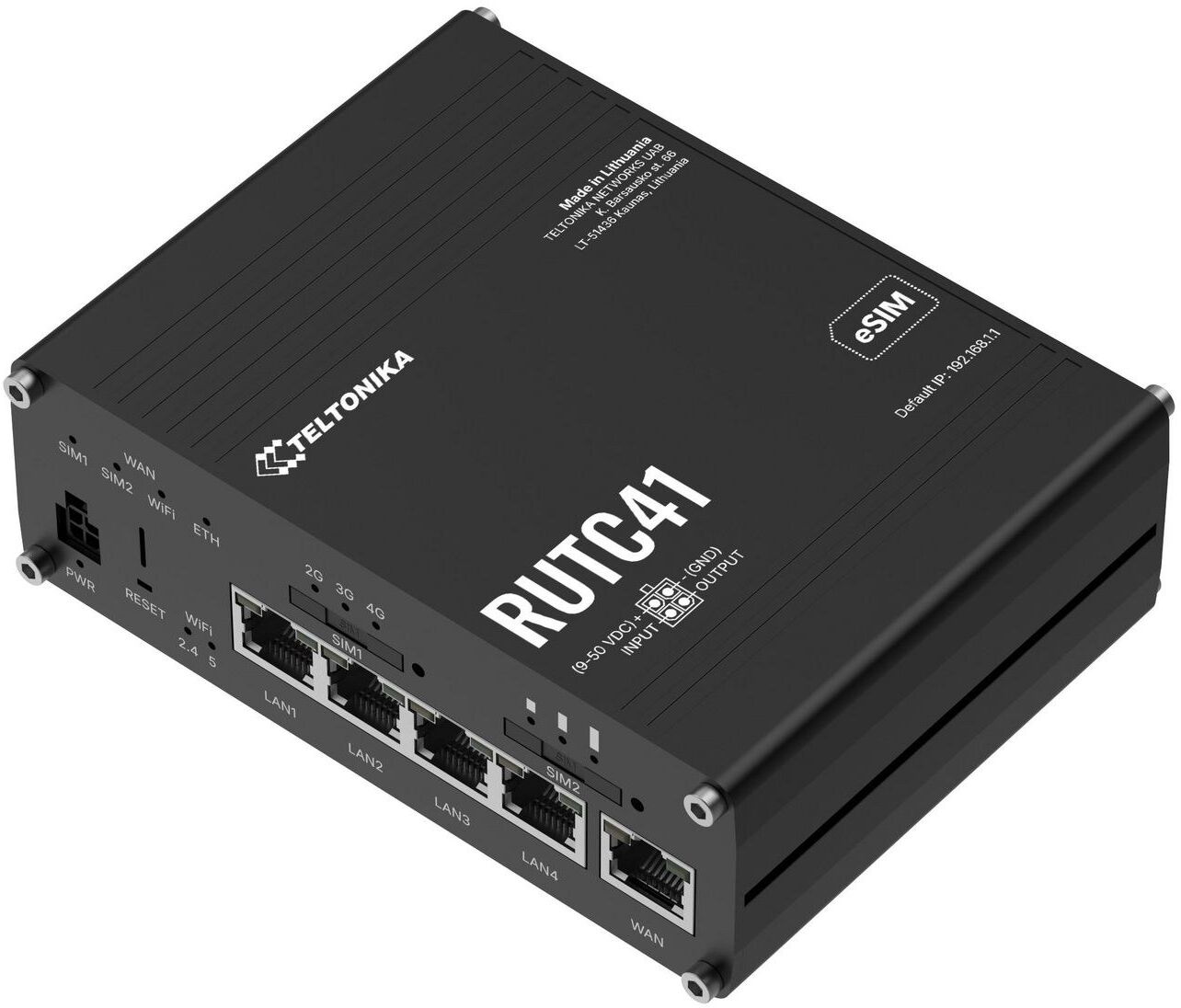
Teltonika Networks Teltonika RUTC41 (EU) 4G Cat 4 Edge Router with Wi-Fi 6, Docker Support, 5x Ethernet Ports and eSIMTeltonika RUTC41 (EU version) industrial 4G LTE Cat 4 edge router with Wi-Fi 6. Five Ethernet ports, eSIM support and Docker container support for running applications on the router.515,99 £*Shipping: 0,00 £Secure redirect to the provider
-
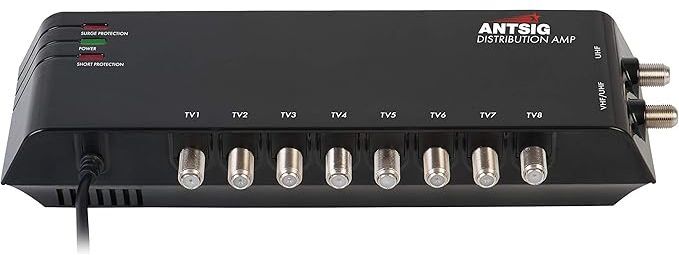
Antsig Distribution Amplifier 8 Way, NewEnsure crystal-clear signal strength across multiple devices with the Antsig Distribution Amplifier 8 Way — a reliable and high-performance solution for distributing digital TV, FM, or DAB signals to multiple TVs or tuners in your home or commercial setup. This amplifier is designed to boost signal strength and maintain picture and sound quality, especially in areas with weak reception. Whether you're connecting TVs in different rooms or setting up a home entertainment system, Antsig delivers superior signal stability and wide coverage, making it the perfect choice for seamless media enjoyment. 🔶 ( 8-Way Signal Distribution ) – Distributes amplified signal to up to 8 different TVs or devices without signal loss. 🔶 ( High Gain Amplification ) – Enhances weak signals, improving clarity and reception across all connected devices. 🔶 ( Digital TV, FM & DAB Compatible ) – Supports a wide range of signals for versatile use in your entertainment setup. 🔶 ( Easy Plug-and-Play Installation ) – Simple setup with no complex configuration needed; ready to go out of the box. 🔶 ( Low Noise Output ) – Delivers a clean, interference-free signal for superior audio and video performance. 🔶 ( Compact & Durable Design ) – Space-saving design fits easily into any setup and built with long-lasting components. 🔶 ( Ideal for Homes & Commercial Spaces ) – Perfect for large households, offices, apartments, and hotels. 🔶 ( Power Supply Included ) – Comes complete with its own power adapter for uninterrupted performance. 🔶 ( Stable Signal Across All Ports ) – Ensures consistent signal strength across all 8 outputs. 🔶 ( Wall-Mountable Option ) – Flexible installation with optional wall mounting for better space management. The Antsig Distribution Amplifier 8 Way is the ultimate solution for homes or businesses needing consistent, high-quality signal distribution across multiple screens. Say goodbye to signal dropouts and enjoy uninterrupted entertainment with strong, stable performance in every room. Ideal for digital TV installations, this amplifier ensures you get the best possible viewing and listening experience from all your connected devices.24,99 £*Shipping: 0,00 £Secure redirect to the provider
-
Radius Electrofusion Gas Distribution Valve 32mmDonkin MDPE (PE 80) electrofusion fittings, for use with MDPE (PE80) gas pipe, is manufactured to the requirements of B.G Transco Technical Standard PL2 - Part 4. Electrofusion fittings are supplied in individual sealed bags to avoid contamination of the joint surfaces prior to jointing.79,02 £*Shipping: 0,00 £Secure redirect to the provider
-
Uplifted Finds Mini Portable Folding Stove And High Fidelity Thermal Logistics Architecture Mini Portable Folding Stove And High Fidelity Thermal Logistics ArchitectureCommand ultimate environmental confidence with this Stainless Steel Mini Folding Stove, a thermal regulation solution specifically engineered to act as a comprehensive tool for elite organization and superior technical ergonomics. Built with a...177,97 $*Shipping: 0,00 $Secure redirect to the provider
-
What is the difference between docker kill and docker stop?
The main difference between `docker kill` and `docker stop` is how they handle the termination of a container. When you use `docker stop`, it sends a SIGTERM signal to the container, allowing it to gracefully stop by executing any shutdown procedures. On the other hand, `docker kill` sends a SIGKILL signal to the container, forcing it to immediately stop without any cleanup. In summary, `docker stop` gives the container a chance to clean up and exit gracefully, while `docker kill` forcefully terminates the container. **
-
Is Docker Desktop secure?
Docker Desktop is generally considered to be secure, as it provides isolation between containers and the host system. However, like any software, there may be vulnerabilities that could potentially be exploited. It is important to keep Docker Desktop up to date with the latest security patches and follow best practices for securing containerized applications. Additionally, users should be cautious when downloading and running images from untrusted sources to minimize security risks. **
-
'Can't access Docker files?'
If you are unable to access Docker files, there could be a few potential reasons for this. First, ensure that you have the necessary permissions to access the files. If you are using Docker in a virtual environment, make sure that the virtual environment is properly set up and running. Additionally, check that the file paths and names are correct and that the Docker containers are running as expected. If you are still unable to access the files, it may be helpful to consult Docker documentation or seek assistance from the Docker community for troubleshooting. **
-
What are the Docker ports?
Docker ports are used to expose services running inside a Docker container to the outside world. Ports are essential for allowing communication between the container and the host machine or other containers. By mapping ports from the container to the host machine, external services can interact with the services running inside the container. Docker ports are specified in the Dockerfile or when running a container using the `-p` flag followed by the port numbers. **
Similar search terms for Docker
-
Uplifted Finds High Volume Safety Breakaway Logistics Hub orangeOptimize your pet inventory management with the HighVolume Safety Hub, a professionalgrade identification system engineered with multiunit deployment logic. This highutility lot features 100 individual collar modules, each constructed with a...165,97 $*Shipping: 0,00 $Secure redirect to the provider
-
Uplifted Finds High Volume Safety Breakaway Logistics Hub blueOptimize your pet inventory management with the HighVolume Safety Hub, a professionalgrade identification system engineered with multiunit deployment logic. This highutility lot features 100 individual collar modules, each constructed with a...165,97 $*Shipping: 0,00 $Secure redirect to the provider
-
Uplifted Finds High Volume Safety Breakaway Logistics Hub yellowOptimize your pet inventory management with the HighVolume Safety Hub, a professionalgrade identification system engineered with multiunit deployment logic. This highutility lot features 100 individual collar modules, each constructed with a...165,97 $*Shipping: 0,00 $Secure redirect to the provider
-
Uplifted Finds High Volume Safety Breakaway Logistics Hub greenOptimize your pet inventory management with the HighVolume Safety Hub, a professionalgrade identification system engineered with multiunit deployment logic. This highutility lot features 100 individual collar modules, each constructed with a...165,97 $*Shipping: 0,00 $Secure redirect to the provider
-
How do Docker containers communicate?
Docker containers communicate with each other through networking. Each container can be assigned a unique IP address and port number, allowing them to send and receive data over the network. Docker provides different networking options such as bridge, overlay, and host networking to facilitate communication between containers. Additionally, containers can also communicate with each other using environment variables, shared volumes, or by exposing and consuming ports. **
-
How can I combine Docker?
You can combine Docker with other technologies and tools to enhance its capabilities. For example, you can combine Docker with Kubernetes to orchestrate and manage containerized applications at scale. You can also combine Docker with continuous integration and continuous deployment (CI/CD) tools such as Jenkins or GitLab to automate the build, test, and deployment processes of your applications. Additionally, you can combine Docker with monitoring and logging tools like Prometheus and ELK stack to gain insights into the performance and behavior of your containerized applications. Overall, combining Docker with other technologies can help you build, deploy, and manage applications more efficiently and effectively. **
-
What is the problem with Docker?
One problem with Docker is that it can be complex to set up and manage, especially for beginners. The learning curve for understanding Docker's concepts and terminology can be steep, and troubleshooting issues with Docker containers and images can be challenging. Additionally, Docker's reliance on virtualization can lead to performance overhead and resource consumption, especially when running multiple containers on a single host. Finally, security concerns can arise if Docker containers are not properly configured and managed, potentially leading to vulnerabilities and exploits. **
-
Should I use Docker or native?
The decision to use Docker or native depends on your specific use case and requirements. Docker is a good choice if you want to create lightweight, portable, and isolated environments for your applications. It also simplifies deployment and scaling. On the other hand, using native installations may be more suitable if you require better performance or have specific dependencies that are not easily supported in a Docker environment. Consider factors such as ease of use, performance, scalability, and compatibility with your existing infrastructure before making a decision. **
* All prices are inclusive of VAT and, if applicable, plus shipping costs. The offer information is based on the details provided by the respective shop and is updated through automated processes. Real-time updates do not occur, so deviations can occur in individual cases. ** Note: Parts of this content were created by AI.